



Industry Leadership
Fortis Group plc is likely to be a leader in its industry, with a strong brand presence, market share and technological prowess. This leading position means that the company is able to consistently provide high quality products and services to meet the diverse needs of its customers.
Innovative R&D capabilities
In a fast-changing market environment, the ability to innovate is the key to a company's sustainable development. Fortis Group may focus on R&D investment, with a professional R&D team and advanced R&D facilities, and is able to continuously introduce new products and technical solutions that meet market demands.
Reliable Product Quality
As a responsible enterprise, Futong Group may establish a strict quality control system to ensure that every step from raw material procurement to product production meets high standards. This strict quality control makes Futong's products enjoy a good reputation in the market.
Perfect customer service
Excellent customer service is the key for a company to win customers' trust and loyalty. Futong Group may have a professional customer service team, which can provide timely and professional pre-sale consultation, in-sale support and after-sale service to ensure that customers have no worries in the process of using.
What is Special Cable
Special cables are a class of electrical and communication cables that have been specially designed. It can withstand and operate efficiently in conditions that ordinary cables find challenging or even impossible. Special cables are made with advanced materials and technologies to meet stringent requirements for extreme temperatures, high voltages, underwater applications, fire resistance, and EMI shielding. The adaptability and durability of specialty cables offer seamless operation of systems and significantly reduce maintenance and replacement costs, making them a key component in modern industry and technology.


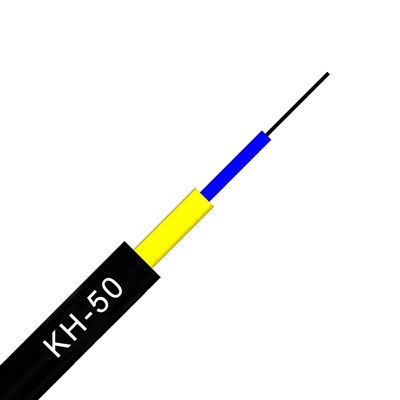


Enhanced performance in extreme conditions: Special wires are designed to operate reliably in extreme conditions. For example, silicone cables can be used in high-temperature environments. It improves uninterrupted service in situations where standard cables may fail.
Greater safety and durability: Specialist cables are made of materials and designs that are resistant to fire, chemicals and physical abrasion. Micc cables greatly increase safety and longevity and reduce the risk of accidents and the need for frequent replacements.
High data rates: Some special wires have extremely high data transfer rates, such as fiber optic cables, which are ideal for telecom and data centers that need to process data quickly and efficiently.
Customized for specific applications: Special cables can be custom designed to meet the unique requirements of different industries. Whether it’s for medical equipment, aerospace,or underwater installation, optimal performance for the specific application can be achieved.
Long-term cost-effectiveness: While the initial expense of special cables may be higher than standard cables. However, their greater durability provides better long-term service life.
What Are the Types of Special Cables?
Environmentally friendly cables
The main feature of eco-friendly cables is that they do not produce and emit any hazardous substances during the manufacturing process, and the final products do not contain hazardous substances prohibited by the ROHS Directive (lead, mercury, cadmium, hexavalent chromium, PBB and PBDE), do not pollute the environment, and are beneficial to health, the environment, and can be recycled substances.
Heating cable
Heating cable, also known as heating cable, is suitable for long pipelines, containers, storage tanks, etc., which need high power output for frost protection, heat preservation, coagulation reduction, and accompanying heat, and it is suitable for common areas, dangerous areas, and corrosive areas. Heating cable can rely on its own electrical energy to generate heat, temperature uniformity, will not overheat, safe and reliable, but also has the characteristics of saving electrical energy, warming start fast, easy installation and maintenance, easy automation management, no environmental pollution.
Fire-resistant cable
Common fire-resistant cable ABHBRP type, AFHBR type, its fire resistance is high, in the case of direct combustion of open flame, in a certain period of time will not occur short-circuit, open-circuit faults, therefore, once a fire occurs, it can ensure the safe operation of the system, which is conducive to extinguish the fire and reduce the loss of the long term operating temperature -40 ℃ ~ 500 ℃. Commonly used in large buildings, petroleum, chemical industry, metallurgy, electric power and other fire safety requirements of the connection of electrical equipment.
Applications of Special Cables
Telecommunications
Special cables, particularly fiber optic cables, serve a important role in telecommunications. It permits high-speed Internet and data transfer across great distances. The ability of fiber optic special cables to resist electromagnetic interference improves communication dependability.
Industrial manufacturing
Within the industrial manufacturing landscape, cables specialized for high-temperature environments and instrumentation are necessary. Capable of enduring harsh conditions, cables enable accurate observation and management of manufacturing operations. It secures the operational safety, efficiency and integrity of data in automated production lines.
Marine and offshore
Marine cables are engineered to endure the rigors of marine settings. They deliver power and communication services to vessels and offshore platforms while guaranteeing the safety and dependability of operations amidst challenges like seawater corrosion, pressure, and mechanical strain.
Healthcare
In healthcare settings, the use of fire-resistant and halogen-free cables is integral for maintaining key services and improving patient safety in the case of an emergency. By inhibiting the propagation of fire and the emission of toxic fumes, the cables safeguard healthcare systems, such as emergency lighting, alarm networks, and medical devices.
Public infrastructure
Special cables are increasingly being used in public infrastructure such as airports, subways, and tunnels. Cables are designed to decrease the generation of dangerous gasses and smoke during a fire.They can minimize the danger of inhalation injuries and offer better protection.
Precautions for Special Cables
Application environment
First, we need to evaluate the environment where it will be used. For instance, we need to consider the temperatures it will be exposed to, whether it will be exposed to any chemicals, or if it will require special physical protection to prevent any mechanical damage.
Electrical Performance Requirements
Importantly, we must select the cable based on the power, voltage level and current capacity it will transmit. For example, in data-centric applications, consider using cables for high-speed communications such as fiber optics. For power applications, evaluate whether the cable can handle the expected load without overheating or performance degradation.
Installation Complexity and Future Maintenance Requirements
Additionally, We would do well to consider ease of installation and future maintenance requirements when selecting cables. Cables that are easy to install and maintain can significantly reduce long-term operating costs.

What Is the Development Trend of Special Cables?
The development trends in special cables are mainly reflected in the following aspects:
With technological advancements, special cables are increasingly adopting more advanced high-performance materials, such as materials with special functions like high-temperature resistance, wear resistance, flame retardance, and corrosion resistance. These materials provide improved electrical performance and mechanical strength to meet the diverse requirements of complex environments.
The special cable industry is actively responding to the growing global environmental awareness. Future trends will focus on green environmental protection, aiming to reduce the environmental impact throughout the product lifecycle. This includes the development of recyclable or degradable materials and optimizing production processes to minimize waste generation.
With the rapid development of smart technology and the Internet of Things (IoT), special cables are gradually moving towards intelligence and automation. Future possibilities include the emergence of intelligent special cable products integrating sensors, monitoring systems, and remote control functionalities.
The demand for special cables in emerging markets is continually growing. For instance, with the development of the renewable energy industry, there will be a sustained increase in demand for special cables used in solar energy and wind power generation.
As the information age progresses, the demand for high-speed, high-capacity communication networks is increasing. Therefore, in areas like data centers and fiber optic communication, special cables will gradually evolve towards higher frequencies and greater bandwidth.
The main difference between special cables and ordinary cables lies in their use, performance, structure and application areas:
Use and performance
Special cables are designed for special occasions or specific conditions of use, with unique performance and special structure. For example, special cables can be resistant to high temperatures, strong acids and alkalis, termite prevention, etc., while ordinary cables do not have these special performance requirements.
Structure and design
Special cables often use new structures, new materials, new design and calculation methods and new production processes, such as armored cables, fireproof cables, flexible cables, etc., while the structure and design of ordinary cables are more conventional.
Application areas
Special cables are widely used in energy development, aerospace, oil extraction, medical, industrial, national defense and other fields, while ordinary cables are more for home improvement, electrical equipment, power transmission and other conventional areas.
Degree of temperature resistance
The allowable working temperature of special cables can reach more than 250 ℃, mostly used for outdoor laying, while ordinary cables such as home furnishing wire for the long-term allowable working temperature of 70 ℃, mostly used for home improvement.
Direction of development
The development of special cables is diversified, especially in the military and construction areas of high demand, while the application of ordinary cables is more extensive and diverse.
Specialty Cables Are Mainly Used in Where
Specialty cables are mainly used in the military market, civil field, oil platforms, submarine cables, civil aviation and high temperature superconducting power transmission and other fields.
Military market
Special cables play a vital role in the military field, military cables have become a major application of special cables due to their strict performance requirements.
Civilian field
Including metallurgical machinery, real estate and construction, information and communication and other industries, especially in important construction projects, the demand for special cables is high, such as fire-retardant cables, used to improve the safety and fire performance of the building.
Oil platforms
The construction and maintenance of offshore oil platforms require a large number of special cables, these cables need to have high temperature resistance, corrosion resistance and other characteristics, in order to adapt to the harsh working environment at sea.
Submarine cables
With the increase in demand for inter-country communications and data interoperability, the construction of submarine cables is also more and more special cables are indispensable in this field.
Civil aviation field
With the booming development of civil aviation, the demand for special cables has risen sharply, such as high-temperature-resistant, small-sized, light-weight wires and cables, used to ensure the safety and comfort of the aircraft.
High-temperature superconducting power transmission
High-temperature cables, as an important part of the specialty cables, have an extremely strong vitality, in short supply, widely used in high-temperature superconducting power transmission field.
Our Factory
Futong Group Import and Export Co., Ltd. is a subsidiary of Futong Group.
Founded in 1987 and headquartered in Hangzhou, Zhejiang Province, Futong Group Co., Ltd. (hereinafter referred to as "Futong Group"), is one of the top 500 enterprises in China and one of the top 500 private enterprises in China. It mainly dedicates in the development of electronic information, energy and power transmission technology and highly purified oxygen-free metal new material technology with more than 10000 employees.
As a builder of global information superhighway and a major provider of global Internet information basic transmission materials, Futong Group takes technological innovation and technological leadership as its competitive advantages, and takes optoelectronic composite cable, sensing optical fiber, high-temperature superconducting cable, and submarine cables as its research and development direction. As the Chinese standard setter of optical fiber preform and optical fiber technology, Futong Group has established a national enterprise technology center and a postdoctoral research workstation. It has won the second prize of National Scientific and Technological Progress Award, the first prize of Chinese Electronic Information Science and Technology Award, and the major technological invention award in national information industry.


Certificate

FAQ
We're well-known as one of the leading special cable manufacturers and suppliers in China. Please feel free to buy customized special cable made in China here from our factory. Contact us for more details.
Bow-Type Optical Cable for Duct GJYXFHA, BBU RRU Connection Optical Fiber Cable GJYFJH, Special Cable