



Indoor Optical Cable
Industry Leadership
Fortis Group plc is likely to be a leader in its industry, with a strong brand presence, market share and technological prowess. This leading position means that the company is able to consistently provide high quality products and services to meet the diverse needs of its customers.
Innovative R&D capabilities
In a fast-changing market environment, the ability to innovate is the key to a company's sustainable development. Fortis Group may focus on R&D investment, with a professional R&D team and advanced R&D facilities, and is able to continuously introduce new products and technical solutions that meet market demands.
Reliable Product Quality
As a responsible enterprise, Futong Group may establish a strict quality control system to ensure that every step from raw material procurement to product production meets high standards. This strict quality control makes Futong's products enjoy a good reputation in the market.
Perfect customer service
Excellent customer service is the key for a company to win customers' trust and loyalty. Futong Group may have a professional customer service team, which can provide timely and professional pre-sale consultation, in-sale support and after-sale service to ensure that customers have no worries in the process of using.
What is Indoor Optical Cable
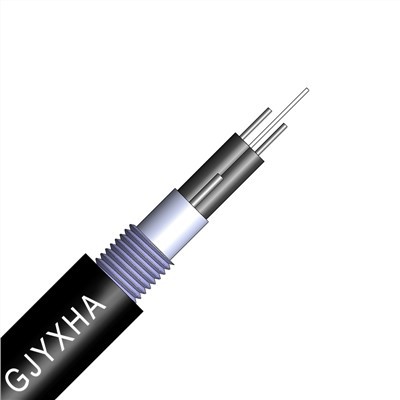
Indoor fiber optic cable is a cable made up of optical fibers that have been processed into a cable with a protective plastic jacket and sheath. It does not contain any metals and therefore has no recycling value. The cable consists of a certain number of optical fibers that bundle together in a specific way to form the cable core, which then covers with protective sheath. Some indoor fiber optic cables may also have an additional protective layer.
Indoor fiber optic cables can use to transmit light signals and are suitable for connecting network devices within buildings. They are lightweight and economical, but have a lower tensile strength and less protective coating compared to outdoor fiber optic cables. This makes them less suitable for harsh outdoor environments, but ideal for indoor applications where they can provide reliable and efficient communication.




Advantages of Indoor Optical Cable
More economical
Indoor fiber optic installation in home cable is more economical than outdoor optical fiber because it doesn’t need very thick sheath and high tensile strength.
Better flexibility
Indoor optical fiber cable usually doesn’t require waterproof construction, this makes it more flexible than outdoor optical cable.
Flame-resistant
Indoor optical fiber cable has to be flame-resistant because it is applied inside buildings where people’s safety must be ensured.
Lighter weight
Indoor fiber optic cable is lighter than outdoor cable because it has no strengthen wire inside cable.
Characteristics of Indoor Optical Cable
Indoor optical cables have smaller tensile strength and poorer protective layer, but they are relatively lighter and more economical. Indoor optical cable is mainly suitable for horizontal wiring subsystem and vertical backbone subsystem. Outdoor optical cables have higher tensile strength, thicker protective layer, which are usually armoured packages (i.e. metal skin wrapped). Outdoor optical cables are mostly used in building group subsystems, and can be used in the occasions such as outdoor burial, pipeline, overhead and underwater laying and so on.
Optical fiber cables are divided into indoor optical cables and outdoor optical cables according to different natural environments. The center of the optical fiber cable is the optical fiber. The center of the optical fiber is usually a core made of glass. The core is surrounded by a glass envelope with a lower refractive index than the core, so that the optical signal entering the fiber core is reflected by the cladding interface, so that the light The signal propagates forward in the fiber core. Because the optical fiber itself is very fragile and cannot be directly applied to the wiring system, it is usually bundled with a protective casing and a tensile wire in the middle. This is the so-called optical cable, and the optical cable usually contains one or more optical fibers.
Features of indoor optical cable: The tensile strength of indoor optical cable is small and the protective layer is poor, but it is relatively lighter and more economical. Indoor optical cables are mainly suitable for horizontal wiring subsystems and vertical backbone subsystems. Outdoor optical cables have higher tensile strength, thicker protective layers, and are usually armored. Outdoor optical cables are mostly used in building complex subsystems, and can be used in outdoor direct burial, pipelines, overhead and underwater laying and other occasions.
Features of outdoor optical cable: It is mainly composed of optical fiber (glass filament as thin as hair), plastic protective sleeve and plastic outer skin. There is no metal such as gold, silver, copper and aluminum in the optical cable, and generally has no recycling value. Outdoor optical cables have higher tensile strength, thicker protective layers, and are usually armored (that is, wrapped with metal skins). Outdoor optical cables are mainly used for interconnection between buildings and between remote networks.
Outdoor optical cable is a communication line that realizes optical signal transmission. The cable core is composed of a certain number of optical fibers according to a certain method, and is covered with a sheath, and some are also covered with an outer sheath. Indoor optical cable is a kind of communication line in which a certain number of optical fibers form a cable core according to a certain method, which is covered with a sheath, and some are also covered with an outer sheath to realize optical signal transmission.
What Are Indoor Fiber Optic Cable Types?
As an indispensable part of modern buildings and data centers, indoor fiber optic cables play the role of a bridge connecting the information world. With the continuous advancement of technology and the diversification of application requirements, the types of indoor optical fiber cable are becoming increasingly diverse to adapt to different installation environments and performance requirements. The following is an overview of some common indoor fiber optic cable types and their characteristics.
Distributed fiber optic system cables (om1, om2, om3, om4, om5)
These types are mainly classified according to international standards for multimode optical fibers, and are used for short-distance, high-speed data transmission. Among them:
OM1 and OM2 are mainly used to support 10Gbps networks, but with the development of technology, they have gradually been replaced by higher bandwidth types.
OM3 and above (including OM4 and OM5) optimize bandwidth and attenuation, and can support higher data rates (such as 40Gbps, 100Gbps or even higher speeds). In particular, OM5 also supports the newer short wavelength division multiplexing (SWDM) technology, which is suitable for future upgrades.
Single-mode fiber cable (os1, os2)
Single-mode fiber is often used in backbone networks and long-distance links due to its long-distance transmission capability and higher bandwidth potential.
OS1 is usually used in metropolitan area networks and supports distances up to 2km, which is suitable for most medium-distance transmission needs.
OS2 provides better attenuation characteristics and supports longer transmission distances, up to more than 100km, making it the preferred choice for long-distance communications and large data centers.
Tight buffered fiber cable
Tight buffered fiber cable is wrapped with a thicker protective layer on the outside and is directly used for indoor wiring. It has strong pull resistance and is easy to terminate directly. It is suitable for environments with frequent plugging and unplugging, such as equipment rooms or data centers.
Loose tube fiber cable
Although Loose tube fiber is designed more for outdoor or underground laying, its high fiber density and good resistance to lateral pressure can also play a role in certain specific indoor environments (such as when a large number of fibers are required and space allows).
Non-metallic reinforced indoor optical cable
This type of optical cable does not have traditional metal reinforcements, which reduces electromagnetic interference and weight, and is particularly suitable for indoor installations with high requirements for fire protection and safety, such as hospitals, schools, and commercial buildings.
Pre-terminated fiber jumpers and fiber cable assemblies
Pre-terminated fiber solutions simplify the on-site installation process and improve deployment efficiency, and are widely used in data centers and network rooms. They include different interface forms such as MPO/MTP connectors, LC, SC, etc., which facilitate the rapid construction of high-density fiber networks.
1. Different reinforcement materials.
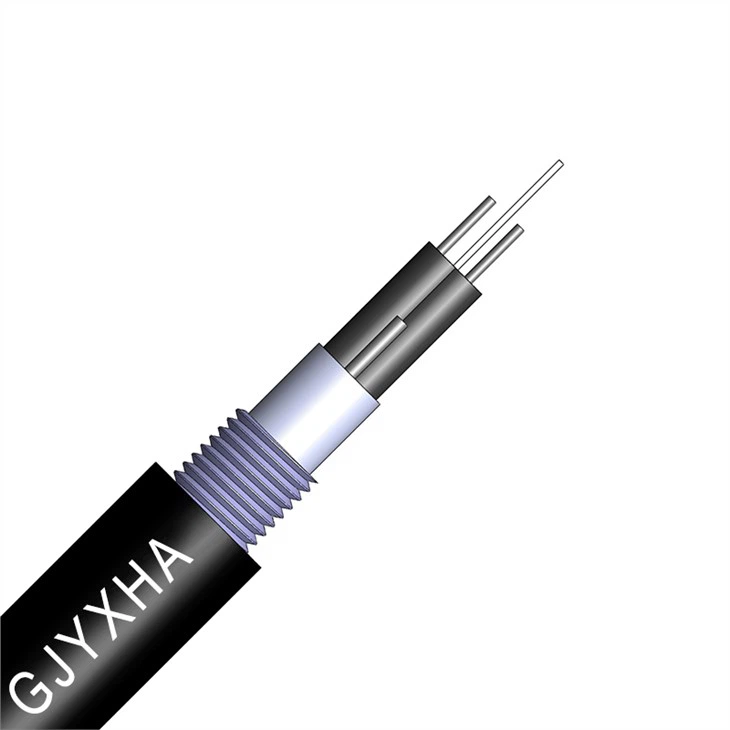
2. The reinforcement material used in indoor cables is aramid fiber (such as Kevlar), which price is around $5,000 to $6,000 per ton, and each fiber also cover with a 0.9mm protective sheath, making indoor cables relatively expensive.
3. Outdoor cables reinforce with steel wire or tape, while the fiber is left bare or coat with color. Outdoor cables generally use single-mode fiber, while indoor cables typically use multi-mode fiber.
4. Single-mode fiber is more cost-effective than multi-mode fiber, which is commonly use in indoor cables, making outdoor cables relatively more expensive.
Installation Considerations for Indoor Fiber Optic Cables
Indoor fiber optic cable is a type of optical fiber cable specifically designed for indoor use. It is used to transmit data through light signals over long distances within buildings or data centers. These cables are typically made of glass or plastic fibers that are surrounded by a protective coating to prevent signal loss or interference.
Installation considerations for indoor fiber optic cables include factors such as cable routing, bend radius, and environmental conditions. Proper cable management is essential to ensure that the cables are installed in a way that minimizes signal loss and maintains optimal performance. Additionally, the bend radius of the cables must be carefully maintained to prevent damage to the fibers.
In the latest point of view, considerations for future-proofing indoor fiber optic cable installations are becoming increasingly important. As technology advances and data demands continue to grow, it is essential to choose cables that can support higher bandwidth and faster data transmission speeds. Additionally, ensuring that the installation is done correctly the first time can help avoid costly upgrades or replacements in the future.
Indoor fiber optic cable refers to a type of fiber optic cable specifically designed for use within buildings or indoor environments. These cables are optimized for shorter distances and are typically more flexible and easier to install than outdoor fiber optic cables. They are commonly used in office buildings, data centers, and other indoor facilities to provide high-speed data transmission.
Maintenance and troubleshooting of indoor fiber optic cables involve regular inspection and cleaning to ensure optimal performance. This includes checking for any signs of physical damage, such as bends or kinks, and ensuring that connectors are securely attached. Troubleshooting may involve identifying and resolving issues such as signal loss, connectivity problems, or data transmission errors.
In the latest point of view, advancements in fiber optic technology have led to the development of more durable and high-performance indoor fiber optic cables. These cables are designed to support higher data speeds and greater bandwidth, making them ideal for the increasing demands of modern networks. Additionally, the use of automated monitoring systems and diagnostic tools has made maintenance and troubleshooting more efficient and cost-effective.
Our Factory
Futong Group Import and Export Co., Ltd. is a subsidiary of Futong Group.
Founded in 1987 and headquartered in Hangzhou, Zhejiang Province, Futong Group Co., Ltd. (hereinafter referred to as "Futong Group"), is one of the top 500 enterprises in China and one of the top 500 private enterprises in China. It mainly dedicates in the development of electronic information, energy and power transmission technology and highly purified oxygen-free metal new material technology with more than 10000 employees.
As a builder of global information superhighway and a major provider of global Internet information basic transmission materials, Futong Group takes technological innovation and technological leadership as its competitive advantages, and takes optoelectronic composite cable, sensing optical fiber, high-temperature superconducting cable, and submarine cables as its research and development direction. As the Chinese standard setter of optical fiber preform and optical fiber technology, Futong Group has established a national enterprise technology center and a postdoctoral research workstation. It has won the second prize of National Scientific and Technological Progress Award, the first prize of Chinese Electronic Information Science and Technology Award, and the major technological invention award in national information industry.


Certificate

FAQ
We're well-known as one of the leading indoor optical cable manufacturers and suppliers in China. Please feel free to buy customized indoor optical cable made in China here from our factory. Contact us for more details.
Self-supporting Drop Cable GJYXFCH, Non Self Supporting Metal Reinforced Drop Cable GJXFH, Indoor Optical Cable