



Industry Leadership
Fortis Group plc is likely to be a leader in its industry, with a strong brand presence, market share and technological prowess. This leading position means that the company is able to consistently provide high quality products and services to meet the diverse needs of its customers.
Innovative R&D capabilities
In a fast-changing market environment, the ability to innovate is the key to a company's sustainable development. Fortis Group may focus on R&D investment, with a professional R&D team and advanced R&D facilities, and is able to continuously introduce new products and technical solutions that meet market demands.
Reliable Product Quality
As a responsible enterprise, Futong Group may establish a strict quality control system to ensure that every step from raw material procurement to product production meets high standards. This strict quality control makes Futong's products enjoy a good reputation in the market.
Perfect customer service
Excellent customer service is the key for a company to win customers' trust and loyalty. Futong Group may have a professional customer service team, which can provide timely and professional pre-sale consultation, in-sale support and after-sale service to ensure that customers have no worries in the process of using.
What is Outdoor Optical Cable
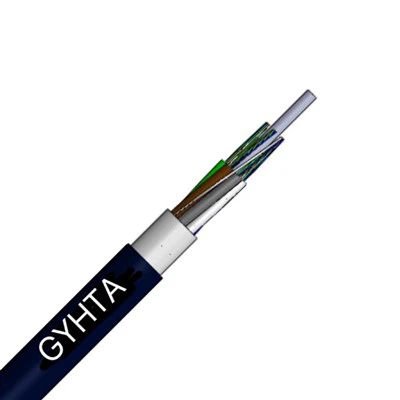
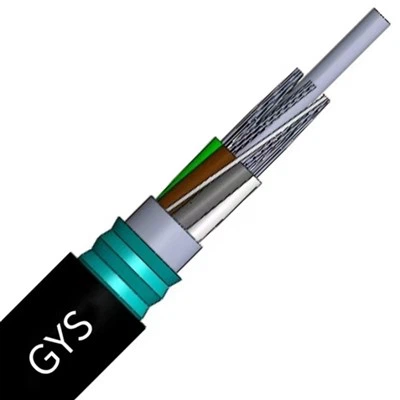
Outdoor Optical Cables are specifically designed to withstand the environmental challenges present in outdoor installations. Unlike indoor cables, which are suitable for controlled indoor environments, outdoor cables are engineered to provide reliable and high-speed data transmission in various outdoor conditions.






High bandwidth and low loss
Outdoor fiber optic cables are characterized by high bandwidth and low loss. The bandwidth of fiber optic communication is much higher than that of traditional cable communication, which makes fiber optic line able to support higher data transmission rates. At the same time, the loss of fiber optic lines is much lower than that of coaxial cables and twisted pairs, which makes fiber optic lines have higher stability and reliability in long-distance transmission.
Strong anti-electromagnetic interference and corrosion resistance
Outdoor fiber optic cable has strong anti-electromagnetic interference and corrosion resistance. The optical signal inside the fiber optic line is not affected by external electromagnetic interference, which makes the fiber optic line have high stability in the complex electromagnetic environment. In addition, fiber optic cable has good corrosion resistance and can be used for a long time in harsh natural environments.
High safety
Outdoor fiber optic cable has high security. The optical signal inside the fiber optic line can not be eavesdropped, which makes the fiber optic line has a great advantage in communication security. In addition, fiber optic lines are not easily affected by the external environment, such as lightning strikes, earthquakes and other natural disasters, which makes fiber optic lines highly reliable in terms of communication security.
Easy installation and maintenance
The installation and maintenance of outdoor optical cable is more convenient than other communication methods. Fiber optic cable installation without digging a trench, only the fiber optic cable buried in the ground or erected on the building, which greatly reduces the construction time and cost. At the same time, the maintenance workload of the fiber optic cable is relatively small, only regular inspection and cleaning can be.
Good environmental performance
Outdoor fiber optic cable has good environmental performance. Fiber optic cable does not produce electromagnetic radiation during use, which has less impact on the surrounding environment. At the same time, the fiber optic cable can be recycled after disposal, which reduces the pollution to the environment.
Outdoor Optical Cable Types
Based on applications, the outdoor cable includes aerial cable, direct buried cable, and duct cable.


Aerial Cables: Aerial cables are suspended from poles or pylons or mounted on buildings. Some are self-supporting, requiring no separate messenger wire between poles to support the cable’s weight.
Direct Buried Cables: In the absence of duct infrastructure, cables can be buried directly into the ground in a trench or using a vibratory plow.
Duct Cables: Duct cables (or conduits) offer a highly protective environment for fiber-optic cables. They are typically buried, and then the cables are air-blown, jetted, pulled, or pushed into the duct.
Based on cable structure, the outdoor cable includes loose tube cable, ribbon cable, micro cable, and drop cable.
Loose Tube Cable: Loose tube cable provides stable performance over a wide temperature range, small, high fiber count cables, and is compatible with any telecommunications-grade optical fiber. • Loose tube cable is made with loose tubes filled with gel or water-absorbent powder to prevent harm to the fibers from water. This cable is composed of several fibers together inside a small plastic tube, which is in turn wound around a central strength member and jacketed.
Ribbon Cable: Ribbon cables offer higher fiber counts and greater fiber density than any other cable construction designed for the outside plant (OSP), four times the highest-fiber-count loose tube cable. It also enable mass-fusion splicing, whereby each 12-fiber ribbon can be spliced in a single, straightforward procedure. This facilitates fast network installation and restoration after cable cuts.
Micro Duct cable: The micro duct is the miniaturized plastic conduit that subdivides internal duct space into smaller compartments into which micro cable can be installed by blowing, jetting, or pushing.
Drop cable: Drop cable is the cable that runs from the distribution point or cable to the subscriber/user.
Underwater Cable: The casing material has good hydrolysis resistance and high strength; the cable paste is filled to provide key protection for the optical fiber.
Armored Cable: Armored cable is a kind of outdoor cable with protective armor wrapped around the fiber cable core. The armor is mainly used to protect the cable from animal bites, moisture erosion, or other damage. Armored cable is designed to withstand crush, pressure, and rodent issues, and provides high flexibility and durability when used in harsh environments or limited space.
Considerations for Outdoor Fiber Cable Design
In outdoor fiber optic applications, customers focus on low loss and latency. Data corruption or loss is dangerous for data-conscious industries, like the financial industry. The network latency will cause customers to obtain data more slowly than other competing companies, seriously affecting business efficiency. The loose tube type is a good choice for preventing signal loss because it protects fiber optic data transmission with minimal optical loss. Additionally, ribbon cables have a greater advantage in terms of latency due to their inherited design, and can also be considered when designing for outdoor fiber.
With the current explosion in demand for intensive network services, high-density cables becomes more common. Future scalability should be taken into consideration when designing outdoor fiber cables to facilitate network upgrades. So there is the flexibility to group and use spare fibers as needed and add additional fibers in the future without reworking for future upgrades.
Generally, if your network bandwidth requires less than 144 fibers, the loose tube cables may be the best choice. If your network requires 288 fibers or more, consider ribbon cables. Micro-tube cables, on the other hand, can be used as a bridging option. You can start with lower fiber counts (from 12 to 288 fibers), then a properly designed system will allow you to have minimal installation costs in the future to expand.
The installation speed of outdoor fiber cables is also a point worth considering. Whether the fiber optic cable access and splicing method save time can also have a major impact on the deployment of the entire network. The increase in the number of fibers also leads to an increase in fusion time. Deployment with loose-tube cables enables fiber stripping without the additional tools, which can save up to 70% of fiber cabling installation time. In contrast, ribbon cables can splice or connect optical fibers on a large scale with an installation speed faster than other cables, reducing installation labor costs and emergency recovery time.
Outdoor fiber cables often have some problems. For example, buried cables may encounter some equipment cuts, and overhead cables may be damaged by natural disasters. Once there is an unexpected network outage, you need to recover network service as quickly as possible with minimal disruption to your business or customers. When the number of fibers reaches 144, the loose tube cable takes about 10 hours to complete the splicing, while the 144-fiber ribbon cable takes only 1.6 hours. However, loose-tube fibers can identify and splice the most critical fibers based on traffic priorities more precisely than ribbon cables.
The last thing to be aware of is fiber availability limitations. Micro loose tube cables are designed for micro pipes and cannot be fitted with armored casings. High-performance cables are not necessarily suitable for all cables, as other mismatches will occur. When you choose the available cable types for your outdoor fiber cables, you must fully understand the cable manufacturer's products and select the one that suits your cabling design.
Applicable Scenarios of Outdoor Optical Cable
Complex laying environment
The structural characteristics of outdoor optical cables make them more reliable in laying complex environments, and they can be applied to the laying of fiber optic cables in various natural environments.
High safety
Outdoor cable structure contains metal, can be designed to increase the number of layers to achieve better protection, can effectively resist the bad weather, poor operation of civil workers and other situations.
The need for high-bandwidth transmission
Outdoor optical cable in the number of cores is relatively large, can be capable of high-bandwidth data transmission, the large bandwidth conditions of data transmission has the advantage.
Outdoor fiber cables are mainly faced with harsh environments, requiring a high degree of flexibility and abrasion resistance, as well as UV resistance. Generally, cables with armored cable protection layers are preferred to increase the wear resistance and corrosion resistance of outdoor fiber cables.
FS FTTA patch cords are high-reliability outdoor single-mode fiber cables designed for outdoor harsh environments such as heavy industry. Composed of Corning fiber optic cables and LC UPC duplex connectors, this cable offers excellent crush resistance and the high flexibility of armored tubing. In addition, FS also offers 4/8-fiber OM2 pre-terminated indoor/outdoor fiber cable assemblies, and pre-terminated indoor/outdoor cable assemblies designed to support today's data needs while meeting the evolving network requirements of tomorrow.
Why Are Outdoor Fiber Optic Cables More Expensive Than Indoor Ones?
Different reinforcement materials.
The reinforcement material used in indoor cables is aramid fiber (such as Kevlar), which price is around $5,000 to $6,000 per ton, and each fiber also cover with a 0.9mm protective sheath, making indoor cables relatively expensive.
Outdoor cables reinforce with steel wire or tape, while the fiber is left bare or coat with color. Outdoor cables generally use single-mode fiber, while indoor cables typically use multi-mode fiber.
Single-mode fiber is more cost-effective than multi-mode fiber, which is commonly use in indoor cables, making outdoor cables relatively more expensive.
What Is the Difference Between Indoor Optical Cable and Outdoor Optical Cable?
Optical fiber cables are divided into indoor optical cables and outdoor optical cables according to different natural environments. The center of the optical fiber cable is the optical fiber. The center of the optical fiber is usually a core made of glass. The core is surrounded by a glass envelope with a lower refractive index than the core, so that the optical signal entering the fiber core is reflected by the cladding interface, so that the light The signal propagates forward in the fiber core. Because the optical fiber itself is very fragile and cannot be directly applied to the wiring system, it is usually bundled with a protective casing and a tensile wire in the middle. This is the so-called optical cable, and the optical cable usually contains one or more optical fibers.
Features of indoor optical cable
The tensile strength of indoor optical cable is small and the protective layer is poor, but it is relatively lighter and more economical. Indoor optical cables are mainly suitable for horizontal wiring subsystems and vertical backbone subsystems. Outdoor optical cables have higher tensile strength, thicker protective layers, and are usually armored. Outdoor optical cables are mostly used in building complex subsystems, and can be used in outdoor direct burial, pipelines, overhead and underwater laying and other occasions.
Features of outdoor optical cable
It is mainly composed of optical fiber (glass filament as thin as hair), plastic protective sleeve and plastic outer skin. There is no metal such as gold, silver, copper and aluminum in the optical cable, and generally has no recycling value. Outdoor optical cables have higher tensile strength, thicker protective layers, and are usually armored (that is, wrapped with metal skins). Outdoor optical cables are mainly used for interconnection between buildings and between remote networks.
Outdoor optical cable is a communication line that realizes optical signal transmission. The cable core is composed of a certain number of optical fibers according to a certain method, and is covered with a sheath, and some are also covered with an outer sheath. Indoor optical cable is a kind of communication line in which a certain number of optical fibers form a cable core according to a certain method, which is covered with a sheath, and some are also covered with an outer sheath to realize optical signal transmission.
Outdoor fiber optic cables are continuously evolving to meet the growing demands for higher data transmission rates. Advancements in technology have led to the development of cables that support faster speeds, such as 40Gbps, 100Gbps, and beyond. These higher data rates enable seamless transmission of large amounts of data, making outdoor fiber optic cables crucial for the future of high-speed connectivity.
Alongside faster data transmission, advancements in cable design are also taking place. Manufacturers are developing cables with reduced diameter and improved flexibility, allowing for easier installations in challenging environments. These design enhancements enable efficient deployment and ensure that outdoor fiber optic cables can adapt to the evolving needs of network infrastructure.
Our Factory
Futong Group Import and Export Co., Ltd. is a subsidiary of Futong Group.
Founded in 1987 and headquartered in Hangzhou, Zhejiang Province, Futong Group Co., Ltd. (hereinafter referred to as "Futong Group"), is one of the top 500 enterprises in China and one of the top 500 private enterprises in China. It mainly dedicates in the development of electronic information, energy and power transmission technology and highly purified oxygen-free metal new material technology with more than 10000 employees.
As a builder of global information superhighway and a major provider of global Internet information basic transmission materials, Futong Group takes technological innovation and technological leadership as its competitive advantages, and takes optoelectronic composite cable, sensing optical fiber, high-temperature superconducting cable, and submarine cables as its research and development direction. As the Chinese standard setter of optical fiber preform and optical fiber technology, Futong Group has established a national enterprise technology center and a postdoctoral research workstation. It has won the second prize of National Scientific and Technological Progress Award, the first prize of Chinese Electronic Information Science and Technology Award, and the major technological invention award in national information industry.


Certificate

FAQ
We're well-known as one of the leading outdoor optical cable manufacturers and suppliers in China. Please feel free to buy customized outdoor optical cable made in China here from our factory. Contact us for more details.
Fig 8 Self supporting Steel Tape Armored Central Loose Tube Optical Fiber Cable GYXTC8S, 2 864 Cores Aluminum Tape Polyethylene Bonded Sheath Stranded Loose Tube Optical Fiber Cable GYTA, Fig. 8 Self-supporting Steel Tape Armored Stranded Loose Tube Optical Fiber Cable GYTC8S